
Why Businesses Need Graphic Designing
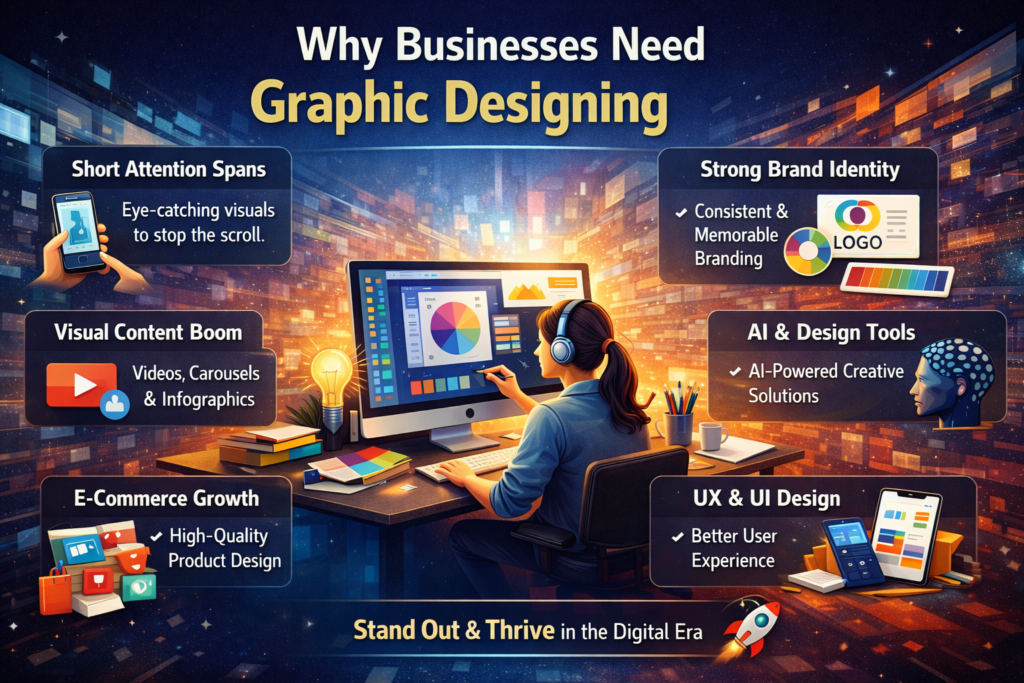
In today’s competitive and visually driven marketplace, graphic designing is no longer just an added advantage for businesses — it is a necessity. Whether a company is a startup, a small local business, or a large corporation, strong visual communication plays a crucial role in attracting customers, building trust, and increasing sales. Graphic design is the art of combining creativity, strategy, and communication to visually represent a brand’s message. Businesses that invest in professional graphic design stand out, connect better with their audience, and create lasting impressions.
One of the most important reasons businesses need graphic designing is first impressions. Customers often judge a brand within seconds of seeing it. Whether it is a logo, social media post, website, or advertisement, the visual presentation determines how professional and trustworthy a business appears. A poorly designed logo or cluttered social media graphic can make a brand look unprofessional, while a clean and modern design builds confidence instantly. In the digital world, where attention spans are short, strong visuals capture interest quickly.
Another major reason is brand identity and recognition. Graphic design helps create a consistent visual identity through logos, color palettes, typography, and design styles. When these elements are used consistently across all platforms — website, social media, packaging, and advertisements — customers begin to recognize and remember the brand. Think about how easily people recognize brands by their colors or logos. This consistency builds familiarity, and familiarity builds trust.
Graphic designing also plays a key role in marketing and advertising. Digital marketing campaigns rely heavily on visuals to attract engagement. Social media ads, banner ads, email campaigns, and website landing pages all require eye-catching designs to encourage clicks and conversions. A well-designed advertisement can significantly improve click-through rates (CTR) and overall marketing performance. In fact, people are more likely to engage with visual content compared to plain text.
In addition, graphic design helps businesses communicate complex information clearly. Infographics, charts, presentations, and visual storytelling simplify complicated ideas and make them easier to understand. Instead of reading long paragraphs, customers can quickly grasp key messages through visual elements. This improves user experience and keeps the audience engaged for a longer time.
Another important factor is professional credibility. A business with high-quality design appears more established and reliable. From business cards to brochures and websites, every design element reflects the company’s professionalism. When customers see polished and consistent visuals, they feel more confident in choosing that brand over competitors. In competitive markets, credibility can be the deciding factor between gaining or losing a customer.
Graphic designing also improves customer engagement on social media. Platforms like Instagram, Facebook, and LinkedIn are highly visual. Posts with attractive graphics receive more likes, shares, and comments compared to text-only posts. Consistent and creative social media designs help businesses maintain an active and appealing online presence. This not only increases engagement but also strengthens brand loyalty.
Website design is another crucial area where graphic design is essential. A website is often the first point of contact between a business and potential customers. A well-designed website with clear layout, proper color usage, readable fonts, and strong visual hierarchy improves user experience. When visitors find a website visually appealing and easy to navigate, they are more likely to stay longer and take action — whether that means making a purchase, filling out a form, or contacting the business.
Graphic design also supports sales and conversions. Strategic placement of visuals, call-to-action buttons, product images, and layout structure can guide users toward specific actions. Good design is not only about beauty — it is about purpose. Every element is placed intentionally to influence customer behavior. Businesses that understand this strategic aspect of design often see higher conversion rates.
In today’s digital era, competition is increasing across all industries. Businesses must find ways to stand out. Unique and creative design gives brands a competitive edge. It differentiates them from competitors and creates a distinct personality. Whether through bold typography, minimalistic layouts, or vibrant colors, graphic design helps brands express who they are and what they represent.
Moreover, graphic design plays a vital role in building emotional connections. Colors, shapes, and imagery can evoke emotions and influence perceptions. For example, blue often represents trust and professionalism, while red conveys energy and urgency. By understanding color psychology and visual storytelling, businesses can connect emotionally with their target audience. Emotional connection leads to stronger brand loyalty and long-term customer relationships.
Graphic designing is also essential for offline marketing materials such as packaging, posters, brochures, and banners. Attractive packaging can influence purchasing decisions in stores. Creative posters and brochures can effectively promote events and offers. Consistent branding across both online and offline materials strengthens the overall brand presence.
Finally, investing in graphic design saves time and resources in the long run. A clear brand guideline ensures that all marketing materials follow the same design standards. This avoids confusion and maintains consistency. Businesses that prioritize design from the beginning create a strong foundation for future marketing efforts.
In conclusion, graphic designing is a powerful tool that supports branding, marketing, communication, and business growth. It enhances first impressions, builds trust, increases engagement, and improves conversions. In a world where visuals dominate digital platforms, businesses cannot afford to ignore the importance of design. Good graphic design is not just about making things look attractive — it is about creating meaningful visual experiences that drive results. For any business aiming to grow, compete, and succeed, graphic designing is not optional; it is essential.