
Why Every Business Needs a Digital Marketing Strategy
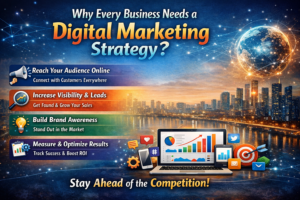
In today’s fast-paced, technology-driven world, the way businesses connect with customers has fundamentally changed. Traditional marketing methods such as print ads, billboards, and cold calls are no longer enough to compete in a marketplace dominated by smartphones, social media, and search engines. A digital marketing strategy is no longer optional—it is essential for every business, regardless of size, industry, or location. From increasing brand visibility to driving measurable growth, a well-planned digital marketing strategy provides structure, direction, and long-term success.
Understanding Digital Marketing Strategy
A digital marketing strategy is a comprehensive plan that outlines how a business will use online channels—such as search engines, social media platforms, websites, email, and paid advertising—to achieve its marketing and business goals. It is not just about being present online, but about using digital tools purposefully and strategically. A strong strategy aligns marketing efforts with business objectives, identifies target audiences, defines key messages, and selects the most effective platforms to reach potential customers.
Without a clear strategy, digital marketing becomes fragmented and inconsistent. Businesses may post randomly on social media, run ads without proper targeting, or invest in channels that do not deliver results. A digital marketing strategy ensures that every action has a purpose and contributes to overall growth.
Changing Consumer Behavior
One of the main reasons every business needs a digital marketing strategy is the shift in consumer behavior. Today’s customers rely heavily on the internet to research products, compare brands, read reviews, and make purchasing decisions. Whether it is a local restaurant, a fashion brand, or a professional service, customers expect to find accurate and engaging information online.
Consumers are no longer passive receivers of advertising messages. They actively search for solutions, follow brands on social media, and engage with content that adds value. A digital marketing strategy allows businesses to meet customers where they already are—on Google, Instagram, YouTube, and other digital platforms—at the right time and with the right message.
Cost-Effective Marketing for All Business Sizes
Digital marketing is more cost-effective than traditional marketing, making it especially valuable for small and medium-sized businesses. Traditional advertising often requires large budgets with no guarantee of results. In contrast, digital marketing offers flexible budgeting, precise targeting, and measurable outcomes.
With a well-designed strategy, businesses can choose channels that fit their budget and goals. Search engine optimization (SEO) helps attract organic traffic over time, social media marketing builds community and trust, and paid ads can be scaled up or down based on performance. A digital marketing strategy ensures that resources are used efficiently, maximizing return on investment (ROI).
Measurable and Data-Driven Results
One of the greatest advantages of digital marketing is the ability to track and measure results in real time. Tools such as Google Analytics, social media insights, and email marketing dashboards provide detailed data on user behavior, engagement, and conversions. However, data alone is not enough. A digital marketing strategy helps businesses interpret this data and turn insights into action.
By analyzing performance metrics, businesses can understand what works and what doesn’t. They can refine campaigns, improve content, adjust targeting, and optimize budgets. This data-driven approach leads to continuous improvement and smarter decision-making, something that traditional marketing methods struggle to offer.
Building Brand Awareness and Credibility
A strong digital presence builds brand awareness and credibility in a competitive marketplace. A digital marketing strategy ensures consistent messaging across all online channels, creating a unified brand identity. From website design and social media content to email campaigns and online ads, consistency helps customers recognize and trust the brand.
Content marketing plays a crucial role in building authority. By sharing valuable blogs, videos, infographics, and social media posts, businesses can educate their audience and position themselves as industry experts. Over time, this trust translates into customer loyalty and long-term relationships.
Targeting the Right Audience
One of the most powerful aspects of digital marketing is precise audience targeting. Unlike traditional marketing, which often targets broad audiences, digital marketing allows businesses to reach specific groups based on demographics, interests, behavior, and location. A digital marketing strategy defines the ideal customer profile and tailors messages accordingly.
This targeted approach increases the chances of conversion because marketing efforts are focused on people who are genuinely interested in the product or service. Personalized marketing experiences also improve customer satisfaction and engagement, making the brand more relevant and appealing.
Staying Competitive in the Digital
As businesses grow, their marketing efforts need to scale accordingly. A digital marketing strategy provides a foundation that supports expansion into new markets, products, or customer segments. Online campaigns can be adjusted quickly to meet changing business needs, making digital marketing highly adaptable.
For startups and growing businesses, a digital strategy helps establish a strong online presence from the beginning. For established businesses, it enables innovation and competitiveness in a constantly evolving digital landscape. In both cases, a clear strategy ensures sustainable growth.
Supporting Bussiness Growth and Scalability
Competitors are already using digital marketing to attract and retain customers. Businesses that lack a digital marketing strategy risk falling behind. Search engine rankings, social media engagement, and online reviews all influence customer choices. Without a strategic approach, businesses may lose visibility and relevance.
A digital marketing strategy helps businesses monitor competitors, identify market trends, and respond effectively. It encourages continuous learning and adaptation, which are critical for long-term success in a digital-first world.
Enhancing Customer Engagement and Relationships
Digital marketing is not just about selling; it is about building relationships. Through social media interactions, email newsletters, and personalized content, businesses can engage with customers on a deeper level. A digital marketing strategy outlines how and when to communicate, ensuring meaningful and timely interactions.
Engaged customers are more likely to become repeat buyers and brand advocates. By listening to feedback and responding promptly, businesses can improve customer experience and strengthen loyalty.
Conclusion
In an era where digital touchpoints influence nearly every purchasing decision, a digital marketing strategy is essential for every business. It provides direction, improves efficiency, and ensures that marketing efforts align with business goals. From reaching the right audience and building brand credibility to measuring results and driving growth, a well-defined digital marketing strategy empowers businesses to thrive in a competitive and ever-changing marketplace.
Regardless of industry or size, businesses that invest in a thoughtful digital marketing strategy position themselves for long-term success. In today’s digital age, strategy is not just an advantage—it is a necessity.