
How Small Businesses Can Compete With Big Brands Using Digital Marketing
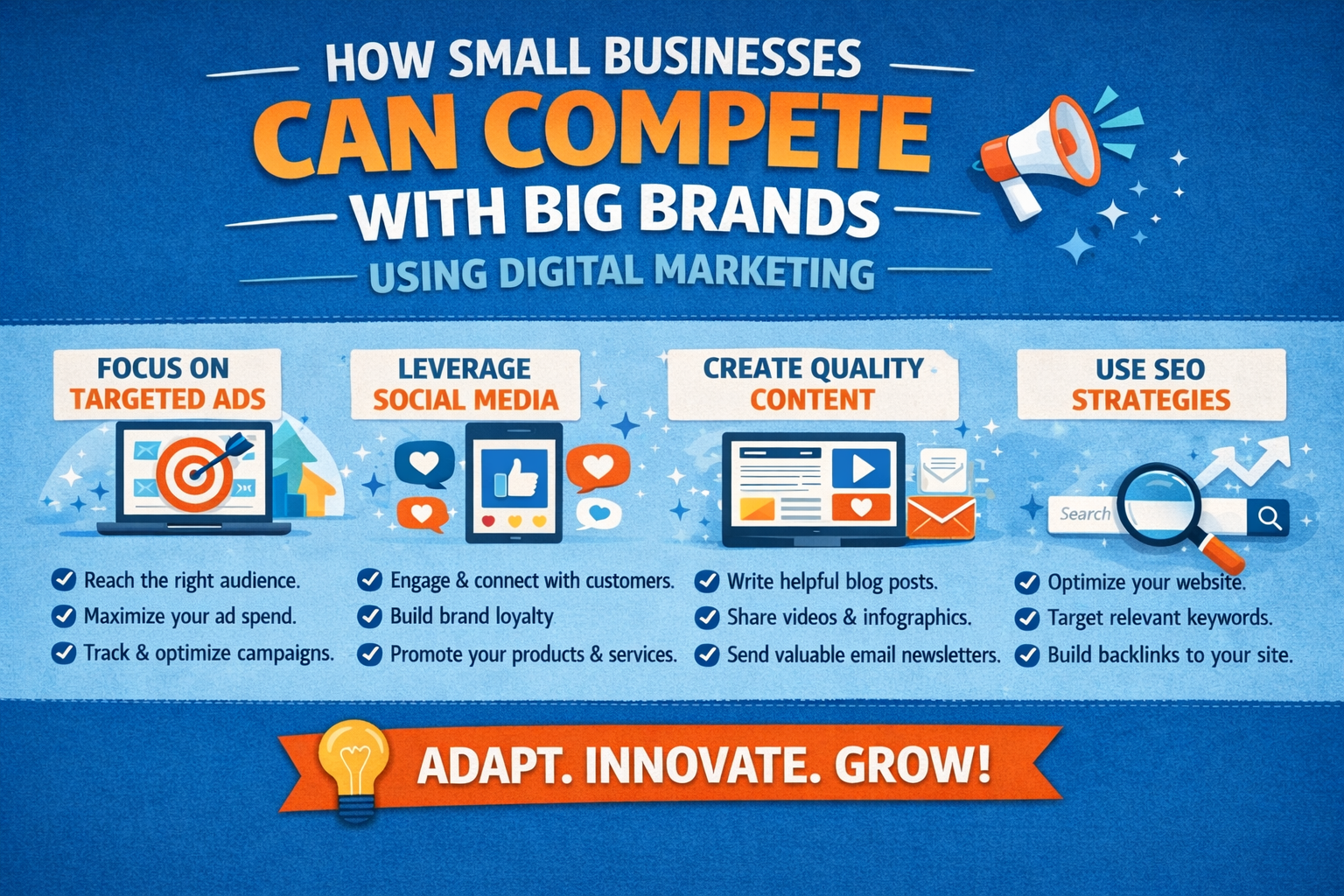
In today’s digital-first world, marketing is no longer dominated only by big brands with massive budgets. Digital marketing has leveled the playing field, giving small businesses the power to compete, grow, and succeed alongside industry giants. With the right strategies, tools, and creativity, small businesses can build strong visibility, connect deeply with their audience, and drive sustainable growth without spending millions.
This article explains how small businesses can effectively compete with big brands using digital marketing.
Digital Marketing Creates a Level Playing Field
Traditional marketing methods such as television, print media, and billboards often favor big brands because of high costs and limited targeting. Digital marketing, on the other hand, allows small businesses to reach the right audience at the right time with minimal budget.
Platforms like Google, Instagram, Facebook, and YouTube provide equal opportunities for visibility. A well-optimized website or a high-performing social media post can rank alongside or even above big brands. Success depends more on strategy, relevance, and creativity than on budget size.
Focus on Niche Targeting Instead of Mass Marketing
Big brands usually target a broad audience, which can make their messaging feel generic. Small businesses have an advantage because they can focus on niche markets and specific customer needs.
Through digital marketing tools, small businesses can target audiences based on:
- Location
- Age and gender
- Interests and behavior
- Search intent
By speaking directly to a niche audience, small businesses build stronger connections and higher conversion rates. Personalized marketing often outperforms mass marketing because customers feel understood and valued.
Leverage Local SEO for Strong Visibility
Local SEO is one of the most powerful tools for small businesses. While big brands focus on national or global keywords, small businesses can dominate local search results.
Optimizing Google Business Profile, collecting customer reviews, and using location-based keywords help small businesses appear in local searches such as “best digital marketer near me” or “restaurant in Kannur.” This makes it easier for nearby customers to find and trust local businesses over large corporations.
Local SEO also builds credibility, as customers often prefer businesses that are physically closer and more accessible.
Use Content Marketing to Build Authority
Content marketing helps small businesses establish expertise and trust without aggressive selling. By creating valuable content such as blogs, videos, reels, and infographics, small businesses can educate their audience and position themselves as industry experts.
Helpful content answers customer questions, solves problems, and builds credibility over time. When customers are ready to buy, they naturally choose brands they already trust.
Big brands may have more resources, but small businesses can win by being more relevant, personal, and consistent with their content.
Run Smart and Cost-Effective Paid Ads
Digital advertising allows small businesses to run highly targeted campaigns with controlled budgets. Unlike traditional advertising, digital ads let businesses track every click, lead, and conversion.
Small businesses can compete with big brands by:
- Targeting specific locations
- Using retargeting ads to reach interested users
- Testing ads with small budgets
- Optimizing campaigns based on performance data
Instead of spending large amounts, small businesses can focus on efficiency, ensuring maximum return on investment (ROI).
Build Trust Through Reviews and Testimonials
Customer trust plays a major role in purchasing decisions. Small businesses can use digital platforms to showcase real reviews, testimonials, and case studies.
Positive Google reviews, social media feedback, and client testimonials help small businesses appear reliable and authentic. Many customers trust peer reviews more than brand advertisements, which gives small businesses a strong competitive advantage over big brands.
Use Email and WhatsApp Marketing for Retention
Big brands often focus heavily on acquiring new customers, but small businesses can gain an advantage by nurturing existing ones.
Email marketing and WhatsApp marketing help maintain regular communication with customers, share offers, updates, and valuable content, and build long-term loyalty.
Consistency Beats Budget
While big brands rely on high spending, small businesses win through consistency. Regular posting, consistent branding, continuous optimization, and long-term strategy create sustainable growth.
Digital marketing rewards patience, creativity, and commitment. A small business that stays consistent will eventually build a strong online presence that rivals even the biggest brands.
Conclusion
Digital marketing has transformed the business landscape, making it possible for small businesses to compete with big brands like never before. Through smart targeting, local SEO, social media engagement, content marketing, and data-driven strategies, small businesses can achieve visibility, trust, and growth without massive budgets.
Success is no longer about who spends more—it’s about who connects better. With the right digital marketing approach, small businesses can not only compete with big brands but also outperform them.